
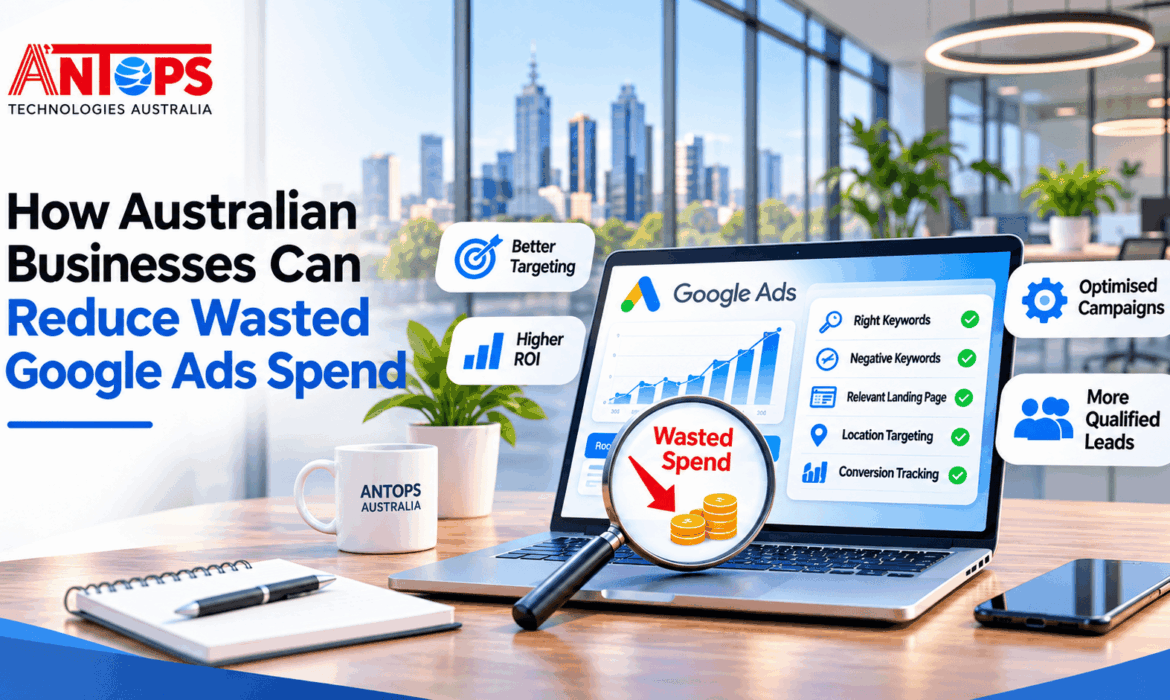
Google Ads can put a business in front of potential customers within minutes, but getting traffic is not the same as getting valuable traffic. A campaign can generate plenty of clicks while quietly consuming the budget on searches that have little chance of becoming enquiries or sales.
For Australian businesses operating in competitive markets, controlling wasted ad spend is therefore just as important as increasing the number of clicks.
The good news is that wasted budget is often caused by identifiable issues. With regular analysis and sensible campaign management, businesses can improve efficiency without simply cutting their advertising budget.
Start With the Right Search Intent
One of the biggest sources of wasted spend is targeting searches that don’t match what the business actually offers.
Imagine a business providing premium commercial cleaning services. A broad keyword such as “cleaning” could trigger searches from people looking for cleaning jobs, household cleaning products, DIY advice or residential services.
The campaign may receive clicks, but many of those visitors were never potential customers.
Keyword selection should therefore be based on commercial intent and relevance, not search volume alone.
Use Negative Keywords Properly
Negative keywords are one of the simplest ways to prevent irrelevant searches from consuming a budget.
If a business sells professional services, it may want to exclude searches containing terms such as “jobs”, “career”, “course”, “training” or “free”, depending on its offering.
However, negative keyword management shouldn’t be a one-time task.
Search terms should be reviewed regularly to identify new irrelevant queries. Adding appropriate negatives can gradually improve the quality of traffic entering the campaign.
Review the Search Terms Report
The keyword list tells you what you intended to target. The search terms report tells you what people actually searched.
This distinction is extremely useful.
A campaign might target “emergency electrician Sydney”, for example, but generate searches for unrelated electrical products, DIY instructions or employment opportunities.
Reviewing actual search terms allows advertisers to identify wasted traffic and discover new relevant searches that may deserve their own keywords or ad groups.
Improve Ad-to-Landing-Page Relevance
Getting the click is only one part of the process.
If someone searches for “commercial office cleaning Sydney” and lands on a generic homepage with no obvious information about commercial cleaning, the likelihood of conversion may decrease.
A more relevant landing page should continue the message from the advertisement.
The visitor should immediately understand:
- What the business offers
- Who the service is for
- Where it operates
- What action they should take next
This creates a smoother journey from search to conversion.
Don’t Ignore Location Settings
Location targeting deserves particular attention for Australian businesses.
A company servicing only Brisbane doesn’t necessarily want to pay for clicks from customers searching from Melbourne or Perth.
Advertisers should review location settings and regularly examine geographic performance. This can reveal areas generating expensive clicks but few or no meaningful conversions.
Location performance can also help businesses identify suburbs or regions where advertising is particularly effective.
Separate High-Value Services
Not every service has the same commercial value.
If a business offers ten services, putting everything into one campaign can make it difficult to understand which areas are actually generating results.
Separating important services into appropriate campaigns or ad groups can provide greater control over budgets, messaging and landing pages.
For example, a business offering both residential and commercial services may benefit from keeping those audiences separate.
Track Real Conversions
Clicks are easy to count, but they don’t necessarily represent business growth.
Australian businesses should track meaningful actions such as:
- Phone calls
- Enquiry forms
- Bookings
- Purchases
- Quote requests
- Qualified leads
Conversion tracking helps identify which campaigns, keywords and landing pages are contributing to actual business outcomes.
Without accurate tracking, advertisers can end up increasing budgets based on traffic that doesn’t generate revenue.
Be Careful With Automated Bidding
Automated bidding can be useful, but it works best when campaigns provide reliable conversion data.
If conversion tracking is incorrectly configured, the platform may optimise towards actions that don’t represent genuine business value.
Before changing bidding strategies, businesses should verify that conversion actions are firing correctly and that primary conversions reflect meaningful outcomes.
Test Before Making Major Changes
Reducing wasted spend doesn’t always mean making dramatic changes.
A better approach is often to identify one problem, make a controlled adjustment and monitor the result.
For example, an advertiser could add negative keywords, improve one landing page and compare performance over the following period.
This makes it easier to understand which changes are actually improving efficiency.
Look at the Business Value, Not Just Cost Per Click
A cheap click isn’t necessarily a good click.
A $2 click that never produces a customer may be less valuable than a $10 click that generates a qualified enquiry.
Businesses should therefore consider metrics such as cost per lead, lead quality, conversion rate and ultimately revenue.
For companies investing in PPC Services, the objective should be to create a campaign that attracts relevant prospects rather than simply maximising traffic.
Make Every Click Work Harder
Google Ads can be a powerful acquisition channel, but it requires ongoing attention. Search terms change, competitors adjust their campaigns and customer behaviour evolves.
Regularly reviewing search terms, negative keywords, locations, conversion tracking, landing pages and campaign structure can help Australian businesses reduce unnecessary spend.
The goal isn’t to eliminate every imperfect click. That’s unrealistic. The goal is to make the budget work harder by consistently moving investment towards searches and audiences that are more likely to become valuable customers.

